
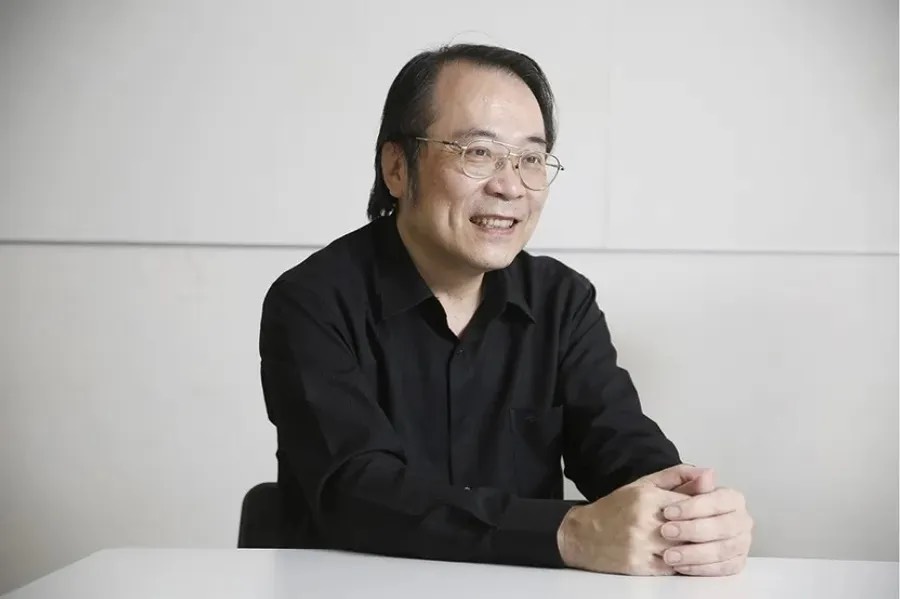
The Financial Supervisory Commission, together with the Taiwan Stock Exchange and the Taipei Exchange, has jointly launched a platform called Asia Innovation Capital, signaling a new chapter for Taiwan’s capital market. The platform focuses on key industries, regulatory relaxation, and strengthened promotion strategies. In response to this development, Lee-Feng Chien, who plays multiple roles as an industry mentor, independent director, and investor, shares his insights and recommendations.
Lee-Feng Chien speaks candidly, stating that now is a “good time” for Taiwan’s capital market to accelerate its progress. From a quantitative perspective, the total market capitalization of TWSE/TPEx listed companies in Taiwan reaches NT$94.9 trillion, ranking 8th globally by country. Notably, in the information technology and semiconductor sectors, four companies – TSMC, Hon Hai, Delta Electronics, and MediaTek – are currently among the world’s top 500 by market value. Benefiting from the strong presence of the technology sector, Taiwan has solid grounds to pursue its vision of becoming the NASDAQ of Asia.
In addition, Lee-Feng Chien highly praises the recent regulatory improvements for the Taiwan Innovation Board, which offer more relaxed and creative measures, significantly enhancing convenience for international teams looking to list in Taiwan. However, beyond expanding investment scale and liquidity, Lee-Feng Chien also offers three strategic perspectives, encouraging the Asia Innovation Capital to make fuller use of its institutional advantages and set more ambitious development goals.
Perspective 1: Deepening Internal Capital Market Innovation and Encouraging “Small Golden Geese” to List Early
In recent years, Lee-Feng Chien has noted a phenomenon in Taiwan’s startup ecosystem: most successful TWSE/TPEx listed cases are “small golden geese” (subsidiaries or sub-subsidiaries) of large conglomerates. However, parent companies typically prefer to release only a minority stake (around 25%) for listing, and only after the subsidiary has achieved stable profits and the parent can secure continued control. This situation can easily dampen the momentum of Taiwan’s capital market and may even lead international observers to mistakenly believe that Taiwan lacks startups.
In response, Lee-Feng Chien believes that the true value of the Taiwan Innovation Board lies in encouraging small golden geese to go public earlier. First, this demonstrates innovative energy and helps reshape industry norms. Second, advancing in the capital market is not just about raising funds; it is even more important to focus on post-listing management strategy: understanding one’s strengths and continuously adjusting operations to better align with market demands.
In response to Lee-Feng Chien’s observations, the new regulations for the Taiwan Innovation Board shorten the shareholding period for domestic companies from two years to one and waive the three-year underwriting sponsor requirement. This move helps lower regulatory barriers for small golden geese to enter the market earlier, enabling companies to achieve their “market-facing” goals more quickly and at an earlier stage.
Perspective 2: Strengthening the Industrial Cluster Mindset and Proactively Recruiting Internationally Complementary Startups
One of the key goals of Asia Innovation Capital is to become the “NASDAQ of Asia.” Lee-Feng Chien points out, “If this is the vision, it should not be limited to ‘Asia for Taiwanese,’ but rather become ‘Asia for the world.’ In other words, it should actively attract innovative companies from other countries to list in Taiwan. Recruitment strategies must shift from passive waiting to proactive engagement and negotiation.”
As for how to identify recruitment targets, Lee-Feng Chien believes that the most important value of Taiwan’s capital market lies in its clustering effect. He suggests focusing on regional countries or technological fields that are highly complementary to Taiwan’s industries. This would allow Taiwan’s supply chain companies to form strategic partnerships with them and jointly share the profits generated after these foreign companies go public in Taiwan.
For regional countries, Lee-Feng Chien uses Israel as an example. The country’s startups possess strong creativity and robust capabilities in hardware–software integration, but they lack manufacturing bases. If they consider going public or raising capital in Taiwan, it would help them build relationships with Taiwanese manufacturers, enhance their credibility, and make it easier to find suitable suppliers. Regarding frontier technologies, Lee-Feng Chien believes that areas such as silicon photonics, 3D/advanced packaging, and AI data center cooling have close ties with Taiwan’s semiconductor industry. Leveraging the capital market to attract these companies to invest in or list in Taiwan would not only strengthen the physical industrial clusters but also help form virtual clusters within the capital market.
Lee-Feng Chien’s remarks also align with the key industries targeted by Asia Innovation Capital, covering forward-looking sectors in the new economy such as semiconductors, artificial intelligence, smart manufacturing, digital cloud, robotics, and next-generation communications. Additionally, the Taiwan Stock Exchange has streamlined existing regulations to lower the barriers for international companies wishing to list in Taiwan. For foreign enterprises whose main operations or shareholder structures do not involve Mainland China, Hong Kong, or Macau, the requirement for a majority of Taiwanese directors has been relaxed – only a minimum of two Taiwanese independent directors is now required.
Perspective 3: Attracting International Analysts and Industry Media to Become an Ideal Observation Platform for the NASDAQ of Asia
Finally, Lee-Feng Chien believes that for an international fundraising platform to sustain a steady flow of capital, achieving a successful listing is only a means. The true key objective is to continuously attract investment and earn a reputation that captures market attention. To gain traction, the specific implementation strategy involves enhancing international visibility and attracting the attention of world-class analysts.
Lee-Feng Chien cites Appier’s listing in Japan as an example, noting that the company’s greatest benefit from going public did not come from its price-to-earnings ratio, but from being noticed by analysts at international financial institutions and receiving the resulting analyses and reports. “These reports provide the most solid marketing boost for B2B enterprises, greatly enhancing their credibility with customers in the industry.”
Lee-Feng Chien suggests that the next step for Asia Innovation Capital is to proactively plan high-profile listings, creating “benchmarks” that can, in turn, generate a clustering effect. In response, the Taiwan Stock Exchange stated that it will adopt a diversified marketing strategy in the future. The supporting measures include enhancing information disclosure for foreign enterprises and increasing the frequency of meetings with institutional investors. These efforts aim to raise the international visibility of companies, provide global analysts with more comprehensive information, and help more benchmark enterprises build their global reputations.
At the launch ceremony of Asia Innovation Capital, Deputy Minister of the National Development Council, Fang-Guan Jan, remarked that Taiwan’s economic development has progressed from labor- and capital-intensive stages to a new era driven by innovation. Finally, Lee-Feng Chien affirmed, “With the establishment of Asia Innovation Capital, we hope its role can leverage the power of the capital market to transform ‘industries of the Taiwanese’ into ‘Taiwanese-led industries,’ relying on international enterprises to strengthen Taiwan’s talent pool while also creating new momentum for economic development in Taiwan.”