
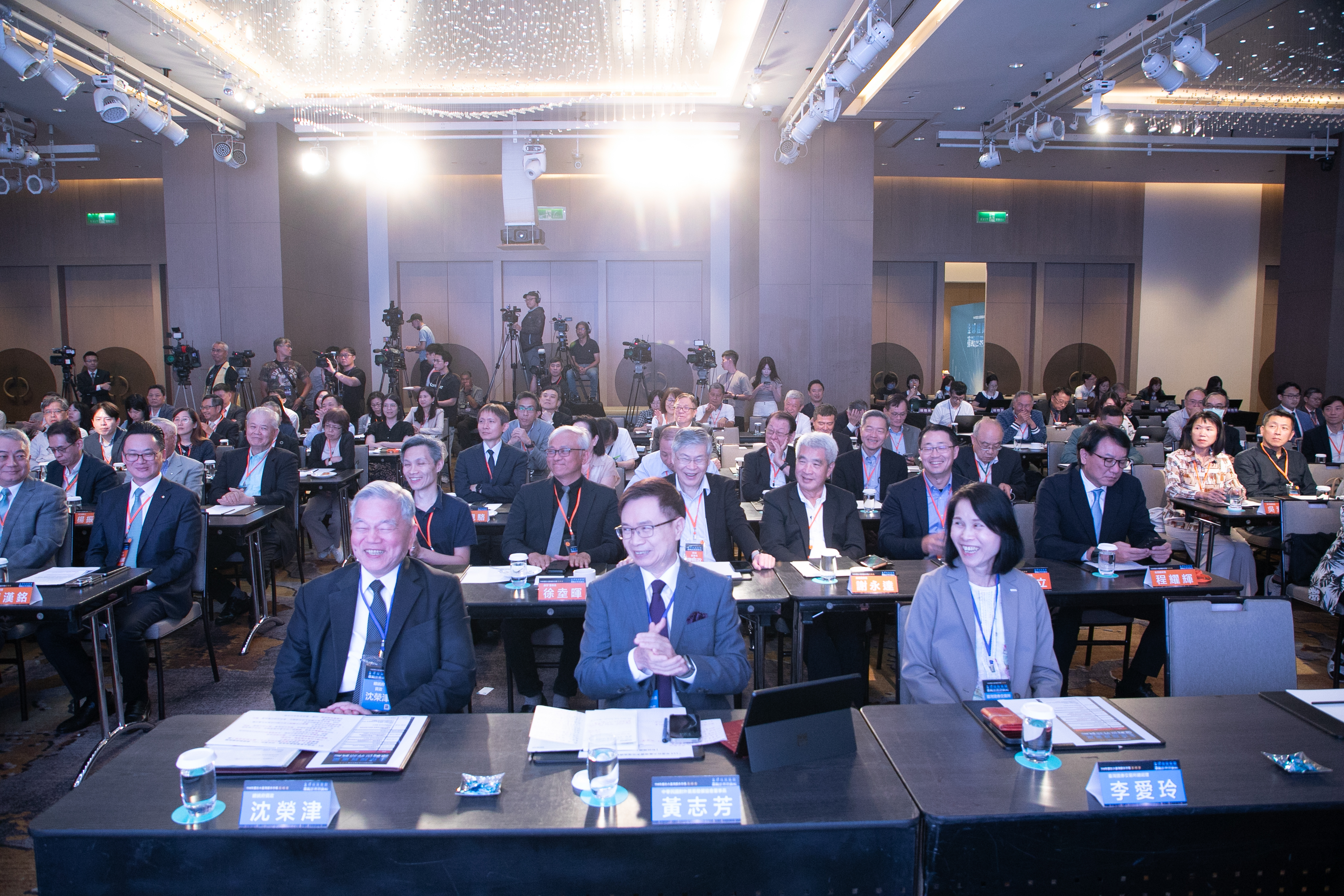
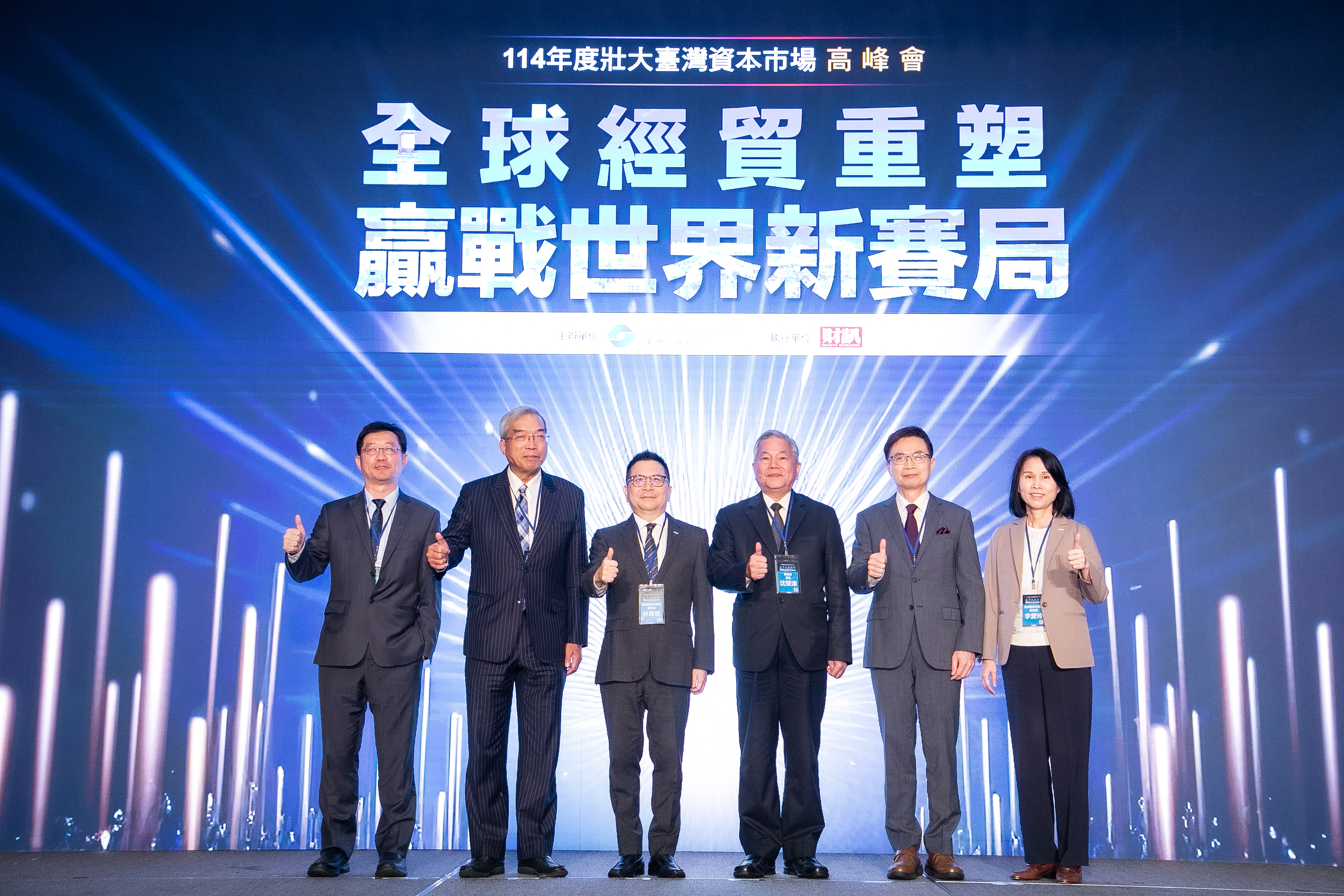
To strengthen the overall development momentum of Taiwan’s capital market and enhance its international competitiveness, the Taiwan Stock Exchange held the “Taiwan’s Capital Market Summit” at Le Méridien Taipei on July 31, 2025, inviting distinguished experts to participate in the discussion. The summit provided an in-depth analysis of current global economic and trade conditions from the perspectives of industry trends, international trade, and financial markets. It offered professional insights and strategic recommendations to help Taiwanese enterprises seize future opportunities. The summit attracted chairpersons, founders, CEOs, and senior executives from nearly 200 listed companies. The lively on-site interactions reflected the industry’s strong interest in macroeconomic trends and capital market development.
Building a Taiwan-Characteristic Asia Asset Management Center to Strengthen Capital Market Momentum
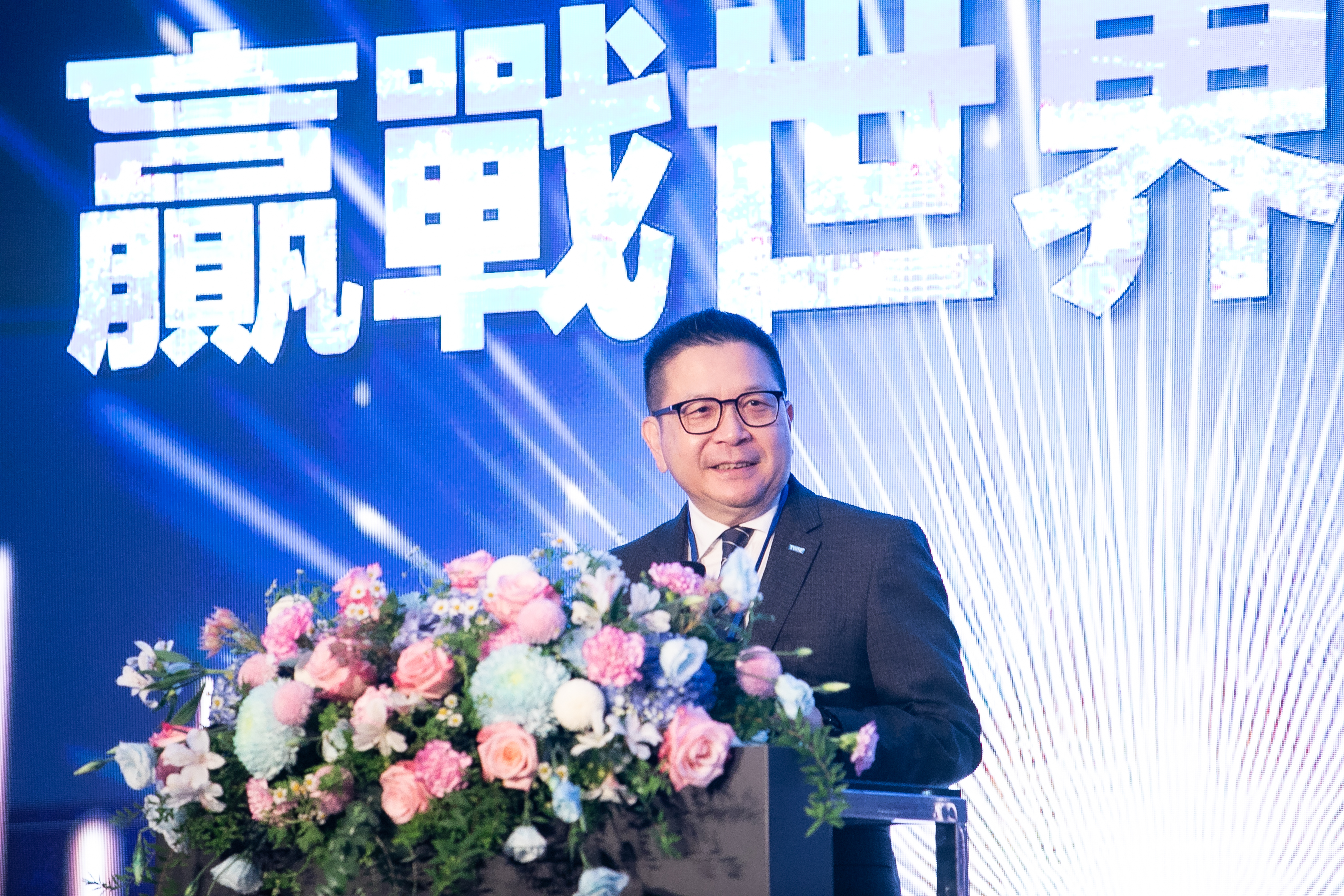
In his opening remarks, Sherman Lin, Chairman of the Taiwan Stock Exchange, stated that the Exchange, as a key component of the plan to establish Taiwan as an “Asia Asset Management Center,” will leverage Taiwan’s high-tech industry advantages and its mature, open capital market to attract high-quality international innovative enterprises to set up in Taiwan. The Exchange continues to focus on “Agility,” “Innovation,” and “Technology” as its core driving forces, collaborating with various stakeholders to help promising innovative industries enter the capital market swiftly. Changes in the global economic and political landscape, U.S. tariff policies, and fluctuations in the New Taiwan dollar exchange rate have profound impacts on Taiwan’s export-oriented trade system and overall economic development. As a crucial link in the global supply chain, Taiwan must accelerate strategic adjustments and strengthen its adaptability to maintain a competitive edge amid market fluctuations.
Analyzing the Impact of U.S. Economic and Trade Policies, AI Industry Trends, and Global Supply Chain Restructuring on Taiwan
The event began with a remarkable keynote speech by Chin-ho Hsieh, President of Wealth Magazine Biweekly, titled “How the U.S. First Policy Reshapes the Global Economic, Trade, and Supply Chain Landscape.” From a global macroeconomic perspective, President Hsieh provided an in-depth analysis of the current international situation and industry shifts, with his insights centered around four main themes. First, the United States employs a reciprocal tariff strategy, requiring other countries to open their markets and increase investment or face high tariffs. President Hsieh pointed out that the authority to set tariffs rests entirely with Trump and is highly discretionary. The U.S. uses tariffs as a tool, with the core objectives of increasing its tariff revenue, compelling countries worldwide to open their markets to the U.S., and attracting large-scale investment into the U.S. In international negotiations, the guiding principle is “deal,” meaning that in addition to opening its market, Taiwan must make corresponding investments in the U.S. to secure lower tariffs. Secondly, the global AI wave is sweeping across industries, from chips and servers to materials supply chains, leading to a rapid restructuring of the entire industrial chain. The AI wave is this year’s most impactful variable affecting industries. AI-related company stocks have shown strong performance, encompassing AI servers, high-end copper-clad laminates, printed circuit boards, and upstream materials such as fiberglass and copper foil. This new era is driving rapid industrial transformation, with many emerging tech companies rising swiftly. Looking ahead, Taiwan plans to develop ten major AI infrastructure projects, including silicon photonics, quantum science, and the drone industry. Third, China’s economic “involution” has weakened consumption and investment momentum, exerting long-term effects on regional supply chains and market dynamics in Asia. Fourth, following sharp fluctuations in the New Taiwan dollar in the second quarter, stability is expected to help restore confidence in the capital market. Within the context of global industrial restructuring, Taiwan’s high-tech manufacturing advantages position it to seize leadership in the next wave of supply chains, especially if it can accelerate alignment with AI application scenarios. President Hsieh also emphasized that as enterprises enter the era of value addition, they must leverage technological innovation and high value-added strategies to meet global trade challenges. Taiwan’s capital market has demonstrated long-term stability, providing an effective financing platform for industrial upgrading and serving as a key factor in attracting international capital.
Taiwan’s Industries Embrace Second-Stage Internationalization and Structural Transformation
Hsien-ming Lien, President of the Chung-Hua Institution for Economic Research, delivered a presentation titled “Reciprocal Tariffs in the U.S. and Their Impact on Taiwan’s Industries,” providing an in-depth analysis of the background and effects of the Trump administration’s tariff policies. President Lien noted that the global order is shifting from globalization to economic security. The previous emphasis on “economics serving politics” has changed, and the current characteristics include “China plus one,” “Great Power Diplomacy,” and “Small Yard, High Fence.” President Lien highlighted four main motivations behind Trump’s tariff policy: reducing the trade deficit, opposing outsourcing, reviving U.S. manufacturing, and generating fiscal revenue. He emphasized that Trump’s goal is not reciprocity but negotiation, with the core being concessions. In addition to opening markets and purchasing more U.S. goods, countries are also expected to increase their investment in the United States. Facing these challenges, President Lien believes that Taiwanese enterprises have entered the era of “second-stage internationalization,” and traditional industries should pursue a second wave of upgrading and transformation. Taiwan should leverage opportunities to invest in the U.S., strengthen the development of the service sector, and cultivate talent in finance, law, and international taxation to prevent industrial hollowing out. President Lien also suggested that enterprises should hire talent with expertise in geopolitics, possess a deep understanding of international trends, and respond proactively to changes in the global landscape, thereby turning challenges into opportunities.
Enterprises Strengthen Value-Added Transformation and Expand International Presence to Address Global Challenges
Another highlight of the event was the forward-looking forum, centered on “Seizing New Global Competitive Dynamics: New Opportunities for Taiwanese Enterprises.” The forum was hosted by Chin-ho Hsieh, President of Wealth Magazine Biweekly, featuring an in-depth discussion with Jung-chin Shen, Senior Advisor to the Office of the President; Chih-fang Huang, Chairman of the Taiwan External Trade Development Council; and Hsien-ming Lien, President of the Chung-Hua Institution for Economic Research. The discussion addressed multiple perspectives, including Taiwanese business strategies amid the new normal of U.S.–China rivalry, the New Southbound Policy in response to the U.S.’s updated tariff regime, the impact of New Taiwan dollar and U.S. dollar policy changes on Taiwan’s capital and investments, planning for overseas markets by Taiwan’s advantaged industries and traditional export sectors, and how Taiwanese enterprises can strengthen risk management while enhancing international competitiveness.
Jung-chin Shen, Senior Advisor to the Office of the President, reviewed the Trump 1.0 era of the U.S.–China trade and technology war. During that period, Taiwanese enterprises leveraged their manufacturing integration experience and OEM/ODM technological advantages to rapidly adjust their operational models. Through third-country production and order-shifting mechanisms, they effectively diversified risks, successfully driving a new wave of economic growth in Taiwan and initiating the “de-sinicization” trend. Among these efforts, the “Three Major Investment Programs for Taiwanese Businesses Returning to Taiwan” played a crucial role in reshaping Taiwan’s economic trajectory. Facing Trump 2.0’s comprehensive reciprocal tariffs, Senior Advisor Shen noted that their purpose is to reduce the U.S. trade deficit, which has profound impacts on the global trade order and supply chain structure. He advised Taiwanese enterprises to adopt flexible operational models, diversify supply chains, reduce reliance on a single market, and achieve market diversification to mitigate risks. He also emphasized localized strategies to respond quickly to customer needs while minimizing tariff costs. Traditional industries need to accelerate the adoption of smart manufacturing and AI to enhance their competitiveness. For example, AI can calculate optimal parameters for plumbing products and pharmaceutical formulations. These industries must undergo upgrading and transformation, shifting from high-volume, standardized, low-technical-threshold products to low-volume, diverse, and customized, high value-added products.
Chih-fang Huang, Chairman of the Taiwan External Trade Development Council, likened the current turbulent era to an arena for “Gladiators,” where enterprises must simultaneously cope with geopolitical risks, macroeconomic fluctuations, and disruptive innovations brought by AI. He emphasized that companies must return to their core competencies and maintain unique technological advantages, particularly when facing international competitors, to sustain high profit margins. Chairman Huang also encouraged entrepreneurs to pay greater attention to “balance sheet strategies” to avoid substantial losses caused by major macroeconomic shifts. In addition, the collaboration between the Taiwan External Trade Development Council (TAITRA) and the Taiwan Stock Exchange has effectively promoted the internationalization of Taiwanese enterprises. For example, at Computex, TAITRA partnered with the Exchange to provide services for global investors, facilitating a second-stage transformation and the internationalization of Taiwanese companies. TAITRA actively promotes international matchmaking events, helping enterprises identify overseas acquisition or technology collaboration opportunities, resources, and support. It has also developed the AiEZ TRADE project, providing SMEs with digital and AI marketing tools to support financing and international expansion, strengthen Taiwan’s capital market, attract companies to list domestically, and enhance the international competitiveness of both startups and traditional industries.
Hsien-ming Lien, President of the Chung-Hua Institution for Economic Research, shared that the appreciation of the New Taiwan dollar is closely related to Taiwan’s strong exports in the first two quarters of this year. He noted that the effects of early stockpiling and the NT dollar appreciation are expected to ease simultaneously in the second half of the year. However, regarding interest rates, if the U.S. begins to cut rates, it will create additional pressure on the New Taiwan dollar. President Lien believes that the central bank may implement credit control measures to support traditional industries as much as possible. He noted that Taiwan’s current AI-driven growth reflects real economic influence, unlike Japan’s past asset bubble that led to the “Lost 30 Years.” He reiterated that enterprises should cultivate talent with expertise in geopolitics and make strategic decisions regarding the orientation of their supply chains.
Finally, Chin-ho Hsieh, President of Wealth Magazine Biweekly, concluded that the era of enterprise value-added transformation has arrived. Industries must respond to global trade challenges through technological innovation and high-value-added strategies. He recommended that industries actively adopt AI and smart manufacturing technologies to optimize production processes, move away from low-margin traditional manufacturing, and pursue high-value supply chains to significantly enhance profitability. In particular, traditional industries should accelerate smart transformation and strengthen brand internationalization to meet global market demands for efficiency and environmental compliance. At the same time, President Hsieh encouraged localization and market diversification, suggesting that enterprises establish operations in regions such as ASEAN and the U.S. to spread market risks, reduce tariff costs, and enhance economic resilience. He also recommended leveraging the demonstration effect of leading companies by using publicly showcased benchmark cases to motivate more enterprises to engage in transformation and investment, thereby boosting overall market confidence. These strategies, centered on value-added approaches, combine technological innovation with market diversification to help industries maintain their competitiveness under tariff pressures.
To continuously strengthen the competitiveness of Taiwan’s capital market and enhance corporate value, the Taiwan Stock Exchange will continue collaborating with industries to propel the capital market to new heights. It will also leverage the strengths of both the Main Board and the Innovation Board, consolidating existing industrial foundations while guiding industries toward diversified development and creating greater synergistic benefits. Additionally, it will assist listed companies in adapting to shifting international dynamics while navigating the global investment and business landscape. Through these efforts, Taiwanese enterprises will enhance their competitive edge in the next wave of development. By enhancing corporate value, the overall value of Taiwan’s capital market will be strengthened, steadily advancing the goal of establishing Taiwan as an Asian Asset Management Hub.