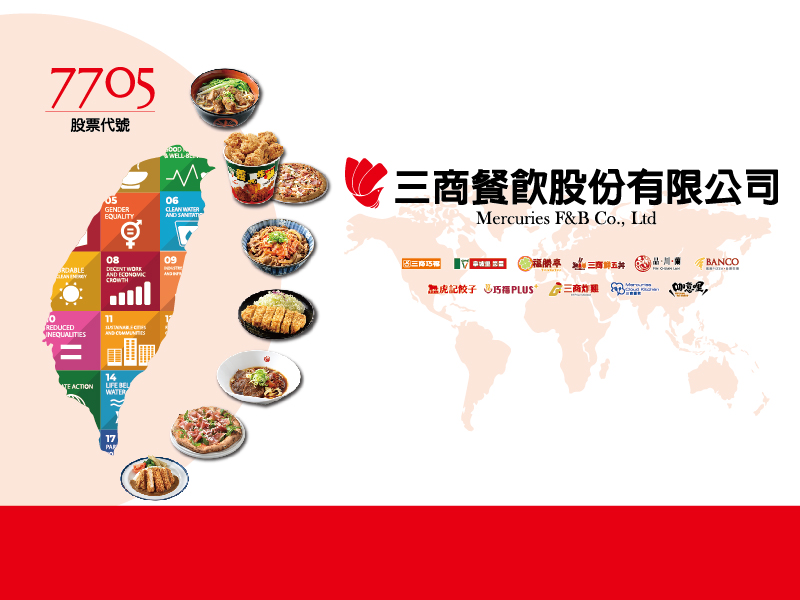
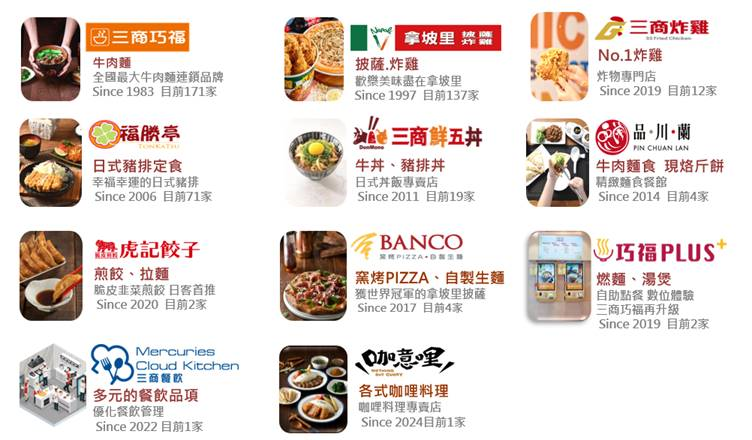
Mercuries F&B, an enterprise that operates multi-brand chain catering, was established in 1996 and merged various catering brands of Mercuries & Associates Holding under its umbrella in 2019. Its catering territory started with Mercuries Beef Noodle (三商巧福) in 1983 and has expanded into different types of cuisines through a multi-brand business strategy to steadily expand its market share. Now it owns “Mercuries Beef Noodle” (三商巧福), “Napoli Pizza and Fried Chicken” (拿坡里披薩.炸雞), “Tonkatsu” (福勝亭), “DonMono” (三商鮮五丼), “Pin Chuan Lan” (品川蘭), “BANCO”, “33 Fried Chicken” (三商炸雞)(formerly Napoli Fried Chicken), “Mercuries Beef Noodle Plus” (巧福Plus), “GAYILI” (咖意哩) and “Tiger Dumpling” (虎記餃子). In addition to brand diversity and in response to changes in dining habits and consumer behavior, the company established “Mercuries Cloud Kitchen” to meet the needs of the food delivery market. The company combines the professional experience of central kitchen, and collaborates with third-party platforms to provide delivery services, aiming to more flexibly meet the needs of consumers. At the same time, it connects and cooperates with local and market brands to achieve a sustainable win-win situation for enterprises, consumers, and catering entrepreneurs in the industry.
Mature and Standardized Process of Central Kitchen with Bulk Procurement Cost Advantage
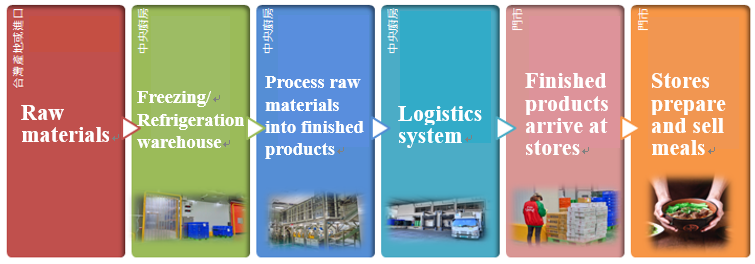
A powerful central kitchen is the best backing for the development of a chain system. Through unified procurement of raw materials and standardized production processes, the central kitchen of Mercuries F&B not only ensures product safety and hygiene, but also ensures the final products are consistent in both quality and taste. The company has standard processes from raw material sourcing and semi-finished product processing, storage and logistics distribution to the sale of finished products at stores and distributes products to stores through mass production and maintenance of stable quality and safety. In terms of ingredient procurement, the large amount of procurement provides room for negotiation with suppliers to effectively reduce the cost of procurement. In addition, Mercuries F&B has self-built storage spaces for refrigeration/freezing, which allow its adoption of strategies responding to seasonal and price fluctuations of raw materials, so as to further realize the benefit of bulk procurement and reduce the risk of ingredient cost fluctuations.
Establishing Local Procurement Strategies and Pursuing the Sustainable Development Goal
Mercuries F&B complies with the UN’s sustainable development goal of “Responsible Consumption and Production” and ensures sustainable consumption and production patterns. Through stable supply from local suppliers, it supports the local economy and maintains community relations. Except for imported ingredients such as beef, cheese, mushrooms, tuna cans, and solid frying oil, Mercuries F&B purchases most of the ingredients and raw materials from domestic suppliers, hoping to promote local economy and employment, and develop a sound supply chain.
Implementing Food Safety Management, Ensuring “Food Safety” for Consumers
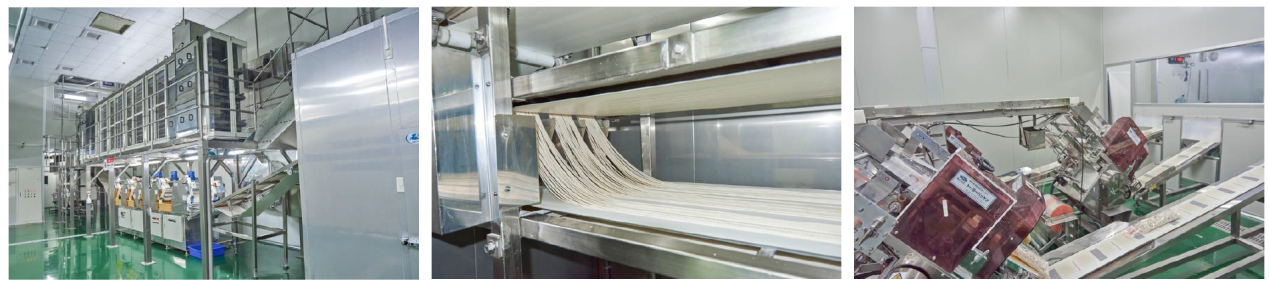
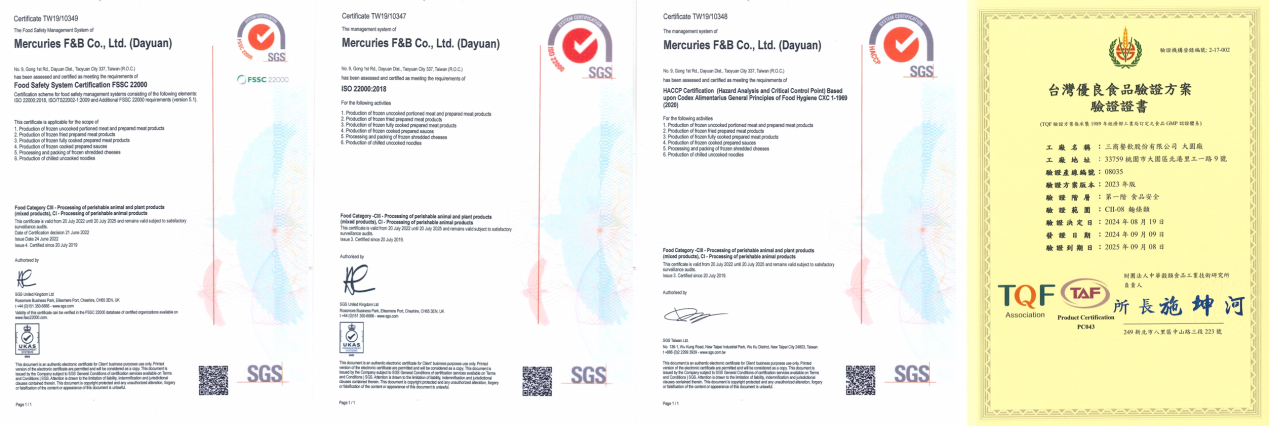
Mercuries F&B has established a standard supply chain model, insists on selecting qualified suppliers, and conducts evaluations and on-site audits of its suppliers. In addition to adhering to the “HACCP” and “ISO/FSSC22000” food safety management system standards to continuously monitor important links such as raw material sourcing, manufacturing, storage, and sales, the central kitchen’s Dayuan premises has obtained HACCP and FSSC/ISO22000:2018 certifications. In addition, the central kitchen’s noodle factory has obtained TQF certification, five products from the boiling and braising production line have obtained clean label product certification, and the quality control laboratory has obtained ISO17025 laboratory certification. Mercuries F&B will continue reviewing the effectiveness and operational status of its food safety management system to ensure effective food safety management and provide consumers with peace of mind when dining.
Mercuries F&B will continue upholding its core values of “food safety, diversified services, and digital innovation” to put food safety regulations into practice, strengthen employee health management, pay attention to restaurant environment and cleanliness, and optimize the self-service system, to strive to overcome the challenges of food cost fluctuation and talent shortages. In addition, through the business strategy of “product diversification, standardized operations, and professional personnel”, the company has created a comprehensive catering business map with multiple profit points and a multi-channel layout, and is moving along the road of sustainable development.