The TWSE, in collaboration with HSBC Securities, jointly held the “HSBC x TWSE Taiwan Conference 2024” for the first time from June 3 to 4. This was the first physical investment promotion event held by the TWSE in Taiwan this year. For two consecutive days, the TWSE held lunch speeches to introduce to institutional investors the potential and prospects of Taiwan’s capital market, as well as the opportunities, transformation, and challenges of Taiwan in the trend of artificial intelligence (AI), and received high recognition from attendees.
Sustainable Development, Trading, and Regulatory Reform of Taiwan’s Capital Market
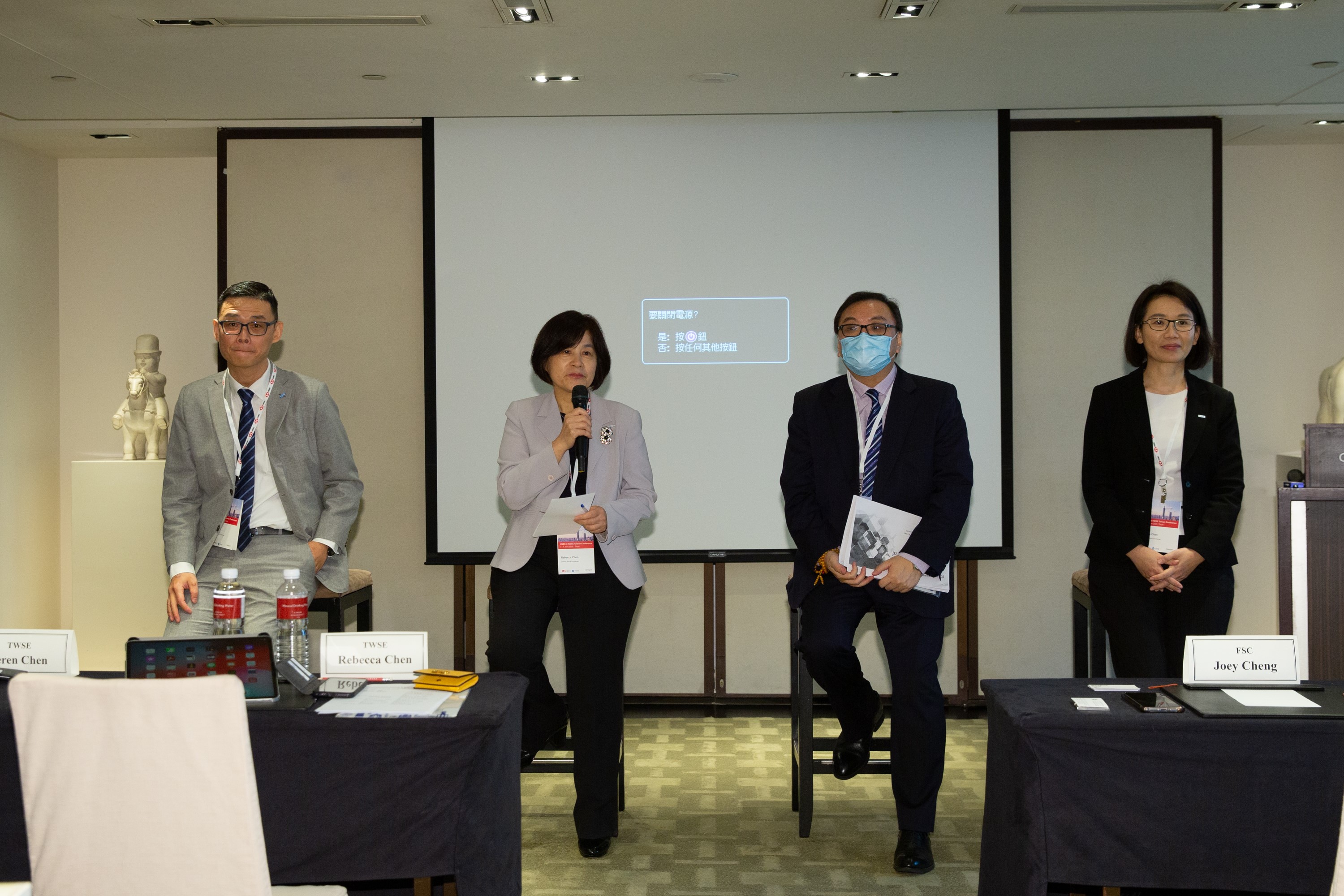
On June 3rd, representatives from the Securities and Futures Bureau and the TWSE, respectively, gave three speeches on sustainable development, trading, and regulatory reform in Taiwan’s capital market. They hoped to help institutional investors understand the latest developments and future planning directions of Taiwan’s capital market through direct dialogues. At the same time, they collected feedback from investors on the Taiwan market, and the event attracted over 50 institutional investors to attend.
Taiwan’s Capital Market Regulatory Reform in 2024
Deputy Director Joey Cheng of the Securities and Futures Bureau, Financial Supervisory Commission outlined various reform measures aimed at promoting the transparency of the capital market, protecting investors, introducing new products, and responding to climate change and sustainable development strengthening policies. Last year, the Securities and Exchange Act and the Securities Investment Trust and Consulting Act were revised to expand the powers of the audit committee, improve transparency in the shareholding declaration, and clarify the legal responsibilities of network service providers and fraudsters in order to strengthen corporate governance and investor protection.
In addition, Taiwan is currently moving towards the revision of the REITs fund structure to improve market diversity. Regarding the T+1 settlement cycle issue which has been enthusiastically discussed in the European and U.S. markets, Taiwan is also conducting various evaluation work to further optimize market efficiency.
ESG Transformation in Taiwan’s Capital Market
Vise President Seren Chen of the Corporate Governance Department, TWSE outlined the efforts of Taiwan’s capital market to promote ESG development, including the launch of the ESG Info Hub platform, which integrates various sustainable information and presents it in a visual way through dashboards, in order to help investors and businesses better understand and use ESG related information. In terms of regulations, Taiwan is committed to ensuring that ESG information disclosure complies with international IFRS standards, in order to further enhance information transparency and market trust.
Latest Developments in Taiwan’s Capital Market
Alex Liu, Senior Manager of the Trading Department, TWSE, shared that even in the circumstances of high interest rates and high inflation, Taiwan still maintains good GDP growth and stable inflation, and the unemployment rate is relatively low. With the rise of the AI industry, the revenue of listed companies has increased and attracted many foreign institutions to invest, demonstrating the resilience of Taiwan’s economic environment.
Foreign institutions are playing an increasingly important role in Taiwan’s capital market. Currently, foreign institutions contribute to about 30% of the transaction amount and 40% of the market value; taking TSMC as an example, foreign institutions hold over 70% of their shares. Foreign institutions mainly come from developed countries, with over 40% from the United States, followed by the European Union (24%) and the United Kingdom (12%). At the same time, the main industry they invest in is IT, especially semiconductors.
The TWSE has also launched many friendly foreign investment policies in order to strengthen market resilience and investment confidence through measures such as product diversification and digital innovation.
Taiwan Plays a Key Role in the AI Industrial Chain, Showcasing the Potential of Its Capital Market
AI was chosen as the theme on June 4 to enable investors to gain a better understanding of the opportunities and development of Taiwan’s industries under the AI boom, and attracted over a hundred foreign institutional investors to participate.
Firstly, Shin-Chung Chen, Senior Vice President of the Corporate Communications Department, TWSE introduced Taiwan’s role in the AI industrial chain and upstream under the topic of “Potential and Prospects for Taiwan’s Capital Market.” The Taiwan capital market has shown great potential in AI, ESG and investor services, and the stock market has flourished due to factors such as high liquidity, high dividends and high IPO activity. The Taiwan’s economy is gradually shifting from being dominated by information and communication technology (ICT) to diversification. In particular, emerging industries driven by AI have become a new focus.
In terms of ESG, the Taiwan Carbon Solution Exchange, established in 2023, and its ESG disclosure initiative have further promoted sustainable development. The TWSE will continue improving service quality, information disclosure, and ESG practices to create a more friendly investment environment for investors.
AI Industry Status Now and in the Future
Frank Kung, an Analyst of TrendForce Corp., continued with a keynote speech and held a fireside conversation with Ken Liu, CEO of Neuchips Inc. The two speakers shared the trends and challenges of the AI industry’s transformation, pointing out that the demand for high-end AI training is driving the rapid growth of the AI chip market, and enterprises need to focus on developing more precise and efficient chips; this has led to significant growth of NVIDIA, AMD and other AI service providers in the China market.
In terms of technological development, the main trends currently include outsourced AI solutions, edge AI solutions, and high bandwidth memory (HBM), while emerging cooling technologies and high-capacity power supply requirements are also the focus of chip design. NVIDIA and AMD are building edge AI environments and improving power efficiency, while Google expects its TPU AI chip shipments to reach 1 million units by the end of this year. Cloud service providers such as Microsoft and Google are also actively investing in AI ecosystems and developing their own AI chips to enhance competitiveness.
However, AI chip development also faces some challenges. For example, due to the impact of Sino-US trade frictions, Chinese AI service providers may need to rely on local suppliers such as Huawei to cope with government policy changes. Although NVIDIA’s high-performance GPUs have shown excellent performance, their high power consumption has also caused related problems.
Overall, the demand for AI servers is expected to continue increasing, with Google’s TPU becoming the mainstream product this year. NVIDIA still dominates the GPU AI market and will continue introducing new-generation AI chips to meet market demand.
Conclusion
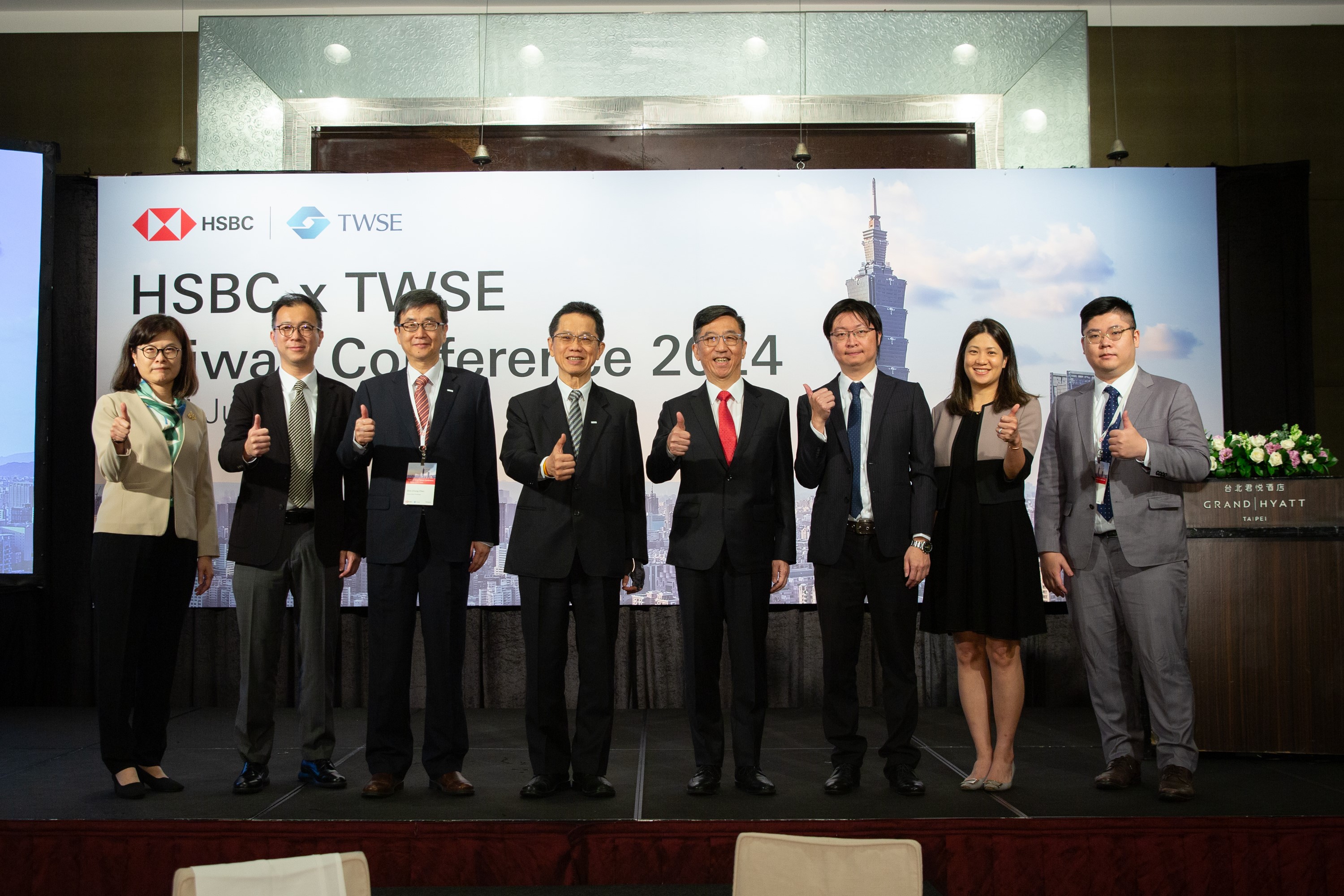
The investment promotion organized by the TWSE in collaboration with HSBC Securities not only showcased the advantages and opportunities of Taiwan’s capital market to institutional investors but also highlighted the AI industry issues that the market is highly concerned about and interested in and successfully attracted the attention of investors. Looking ahead to the future, the TWSE will continue playing a key role in enhancing the communication between listed companies and investors, promoting the Taiwan capital market in a diversified way such as through physical and online activities, and actively creating a friendly investment environment for institutional investors, in order to introduce capital to promote economic development.